flower…

Like so many of us, I’ve spent weeks swept up in the Rise and Fall of Mars Hill Podcast. It has been unexpectedly triggering, validating, freeing (sort of), and oddly explanatory of so many experiences and emotions that just didn’t make sense.

I was a little girl when I received my sexual education, though in retrospect it wasn’t very education based. It was pornographic, abusive, damaging… It was at the hand of an adult male, while on my mother’s neglectful watch. My innocence was exchanged for her house payment and spending money.

I was a teenager when I learned about sex. I was taught that I was damaged because of what had happened to me, and that my only hope at a life was to convince someone to marry me. It was implied that the likelihood of someone falling desperately in love with me was non-existent. Though the motivation for this belief may have been my lazy eye, the fact that I wasn’t pretty, my big-boned body, or my bad breeding–the message I received was that I was tainted–crumpled up garbage. My virginal body was intended for one man, the man whose rib I held, and that was ruined.

I was ruined.

I loved all the boys. While I was completely capable of having solid friendships with members of the opposite sex, the truth was that this small voice in the back of my mind would often sabotage my thoughts by reading into subtle conversations and gestures. I was being groomed within the suffocating culture of a patriarchal oppression to zero in on anything which could make someone find me loveable enough to marry, so when one of my close guy friends innocently triggered that voice, I would spiral. It was always my fault. Always. I was left feeling so stupid and unworthy, every single time.

By the time I was seventeen I had felt decimated by rejection a thousand times already. The deepest of these was with my high school best friend. There was so much confusion woven throughout the trust and bond between us. A part of me, deep down, knew that if he could never love me, I was doomed. He knew me better than anyone, including my most protected flaws, which I tried to hide from the world. It had been made abundantly clear, both by my mother and my teenage legalistic upbringing, that I was nothing without a ring on my finger and a man by my side.

As a newlywed, several years later, I sat in on churched conversations about how it was my responsibility to please my husband. If I didn’t, he would cheat and I would be to blame. If I didn’t keep myself attractive to him, those same rules applied. If I had a friendship with another man, I was being unfaithful to my husband and responsible for the sins of everyone whom I’d caused to stumble with their curiosity about us. If my husband had a friendship with another woman, it was none of my business, but if it became adulterous, while it was still none of my business, it would be due to my inability to please my husband.

To complicate matters more, I was less of a woman if I could not provide my husband a baby (which I couldn’t), and if my sexual abuse had affected my sexual health at all, it was my sin and I needed to repent and fulfill any of my husband’s fantasies.

As a child I existed to meet the lustful needs of a man and it seemed this was all I was good for as an adult too.

At Seventeen years old, I went off to college to find a husband. I CRINGE about this now. While this notion had not only been suggested as my “next step”– there was not a soul in sight encouraging me to do anything else.

Once I was married, I was invited in to the “funny” conversations that other Christian couples had about their sex lives. In fact, I can honestly say that during my church attending part of life, I have heard more dirty jokes within the settings of sermons or small groups/Bible studies than outside of it. As a survivor of sexual abuse whose very body was bartered, shamed, guilted, mutilated, and manipulated again and again–I never found them funny. Did the wives of such “humourous” men find them funny, or did they laugh and play along because they’d been conditioned to?

There is so much damage that has been done within the Purity Culture realm of patriarchal religion. It did not begin there, and it didn’t end there either. Women have been viewed, seen, and treated like meat consistently. I could really rant on and on about that for a long time, but that wasn’t the point of sharing this here.

So what was the point? Mark Gungor once, by his own confession, instructed a woman to perform oral sex on her husband as a means to get him to church. From the way he tells the story, she seemed very uncomfortable with the act of that. He bragged about this story while speaking in Scotland (i believe) in front of both men and women. You can hear the men, in the audio clip, roar with laughter. He went on to tell the women attending to go home and give their husband’s oral sex and keep them happy, to which the men’s laughter resounds again. Though he was far more vulgar about it than the affiliations of Christianity I came up in, the message was the same:

My needs, wants, or desires did not matter.

I existed for the will of a man.

Discarding me would be my fault.

I did not matter. Period.

My sexuality was a joke.

I experienced this at fifteen when the staff of the Children’s home I was in manipulated and shamed me (by using a photograph of my dead grandfather) into lying about seducing a boy to have sex with me. We did not have sex.

I experienced this at seventeen when I became pregnant and was kicked out of Bible college for sexually immoral behavior while my boyfriend (husband now) was permitted to stay.

I experienced this time and again within a religious space that had no desire to help me heal, process, or navigate through my own abuse issues while attempting to be the best wife I could possibly be, existing to please my husband. I was a series of internal triggers and explosions, hiding on the floor of my closed and scratching my skin until I bled.

When, five years into our marriage, my husband did leave me for another woman–I was the one left answering the questions. I was the one that people blamed. It was me. The unstable, immoral girl who got pregnant at seventeen and kicked out of school. The group home kid. It all fell on me. Considering my history, what could they expect? And the fact is, I loved a lot of those people and they were just as lost within the indoctrination as I was. I was missing. Maybe they were too.

While I am no longer missing, there are so many things that still rise to the surface, catching me off guard. There are days when the weight of growing up in this way feels like it will never stop retraumatizing and challenging my worth.

This is my the long-story-short of my purity culture story.

trusting the journey…

I sit here typing these words at forty-five years old. Forty-five… How did that happen? I still feel seventeen inside, barely treading in too-deep-water and wondering when I’ll be able to stop pretending like I’ve got this whole thing under control. I also, admittedly, feel about ninety-two, or at least how I imagine ninety-two to feel when a body is achy, chilled and worn.

In truth, at forty-five, I guess I’m caught somewhere in the middle.

Many years ago, I expected I’d have it all figured out by the time I reached today. Finances would be set. Big life things would be set. All emotionally healing and duress would be behind me. Weren’t we taught by example that these middle days were more like floating life’s lazy river than drowning in the water-rushing-deep end?

I thought so, anyway.

Then my thirties came, and my forties, and I began to realize that all those years ago when I looked up at the adults in my life, they were just treading tired water too. When a once-good friend was depressed over turning forty, as I crossed into thirty, she miserably said that older friends told her it got better then. I encouraged her but left the truth we were both thinking, unspoken: It wouldn’t get better, it would be old.

Old.

The truth is that those in their thirties tell the younger ones it gets better, and it does. The same goes for forties to thirties and fifties to forties… And, at forty-five, it’s fair to say I think it’s true. I mean, flexibility, health and joint pain may not get better- but inside, it does.

How we see the outside– what we’re willing to accept, and tolerate. What we will no longer settle for… As souls, we feel better.

When I thought about this idea of a time in my life when I trusted the journey, my mind came up blank. I sifted through memories of baskets I’d placed all of my hope/faith in, and how each one of those baskets kind of failed. There is this sad little pattern of that sort of thing, within my forty-five years. I’ve tried not to dwell on that, but I’ll admit it doesn’t really encourage me to go all in on faith/hope/trust, when it comes to chapters in my journey. So, I sifted and I sorted even more, looked even harder. I have always been a woman with faith, though that faith has significantly morphed, mutated and changed over the years, so surely I could find some time when I’d trusted the journey…

And that was it: the journey.

While many aging-breakdowns happen at thirty, forty, fifty– mine happened at twenty-five. At twenty-five years old, I had crumbled. With my therapist, I climbed out of that chasm acknowledging that I had a life and it could be the life I chose. I chose to be a wife. I chose to chase motherhood. I chose to be a writer. I chose to help women heal their traumas and choose their lives too. Up close, with a macro focus, it wouldn’t seem like I had much faith (or success really) with those choices… When I step back though, and take in the journey of the past thirty years, I am awed. I chose marriage. I chose to chase motherhood. I did all of the things. Some of them worked out, and some of them blew up in my face. Some days found me sitting in a bathtub covered in pills and vomit, choosing to live despite trying not to. Some days found me overwhelmed and running, and other days found me standing tall and ready for the fight.

Some days… Some moments… Even though I had momentary lapses of surrender and worn exhaustion, the fact was that I did not give up. I moved forward. I embraced choices. I made plans, wove dreams… I trusted my journey.

Back in March I shared the trailer for the film Finding You, which releases on Friday May 14th. In honor of the release, I am giving away a $25 Fandango gift card. I know it might be a little anxiety-inducing to think of going to the movies, but I also know that as things continue to become safer, it’s time that start adding life-moments back in. A free gift card might that nudge you need!

To Enter:

  • Leave a comment on this post by Thursday May 13th at NOON EST, telling of a time you trusted the journey.
  • Leave a comment on the coordinating Instagram post by Thursday May 13th at NOON EST, telling of a time you trusted the journey.
  • Share it in your Instagram story or on Twitter– you MUST tag me (@rainydayinmay)

Your name goes in the drawing for all things… Meaning if you comment both places and share stories/tags on each day, you could technically get ten chances to win. I mean, I’m not going to tell you what to do, just saying you COULD do that. ;)

Let’s hear it… when is a time that you trusted the journey?

just a case of the february…

I hit the second half of February in solid migraine form. I was in bed, living in a heightened state of nausea. The following week my husband had his second dose of the Pfizer vaccine and he was down for the count for three blurred-together days. (his blur, not mine. I was clear headed, but they were unnaturally long days.) The day that he felt human again was the day I was knocked back down:

fever.

chills.

migraine fest.

fatigue.

It was like we were tag-teaming on the worst part of winter blues and seasonal illness, except that he had a reason and I really did not.

In this era of C-19, when every sniffle raises a heightened paranoia, I made the decision to label whatever mystery was bringing me down (life? fibro? stress?) as February.

Are you feeling better? What do you think it was? I am, and February. It was February.

It works, don’t you think? It works because February is possibly the worst of the months. Winter is dragging on (or unfairly pummelling Texas, if we’re lasering in on this year) and though the days are growing a bit longer, it doesn’t matter too much when it’s still cold outside.

Beyond realizing that February is my least favorite of the twelve months, I thought I’d take this end-of-the-month reflection time to share some other things I’ve learned through these past four painfully long weeks:

  • Our little rescue kitten Darcy is nine months old. No one told me that nine months would bring her heat cycle. It was short, but those days were intense. Mostly we both just felt so bad for her. Bless. Also, our vet can’t get her in until April… Will she cycle again? I know nothing… except that the vet will only see her 8 weeks POST cycle so fingers crossed she does not.
  • Because we could not go out for Mardi Gras (something we love to do, even if we are here in the north), I decided to make some Creole food at home. The dirty rice was pretty meh, but the shrimp dish I made was PHENOMENAL and the beignets were a bit like heaven. All in all, a win.
  • A fellow writer talked skeptical me into joining Clubhouse. I was 100% convinced it was stupid and I’d hate it. It turns out it’s timely, pretty fantastic and I love it. Since so much of my job and passion involve community and connection, it has been an incredible experience.
  • Meundies. Have you heard of them? I was told they were the “softest and most comfortable underwear on the planet” and, once again, I was super skeptical. I was wrong. They are heaven. Also, here’s a code to save you $20. Trust me, you WANT to save it to this.
  • I spent moments in February coming face to face with my pride. Really questioning why something may have hurt my feelings and realizing it was up to me to keep myself in check. Sometimes that self reflection can feel really scary and trust me, I am no expert. Growth can be painful, but these growth moments were so healing.

And now, we are practically at March. A beautiful, closer to Spring blank slate and I am here for it- tired, but ready…

let’s talk about our men…

I wanted to take a moment to talk a little bit about mental health. Primarily, men’s mental health. I love that more conversations are happening and we are, as a people, more willing to recognize this issue.

With most mental health things, we often do nothing because we feel powerless to make an impact or bring about change. This isn’t because we don’t care as much as that we care deeply and don’t know how to help. I want to direct our attention to some statistics and something that will be an amazing resource.

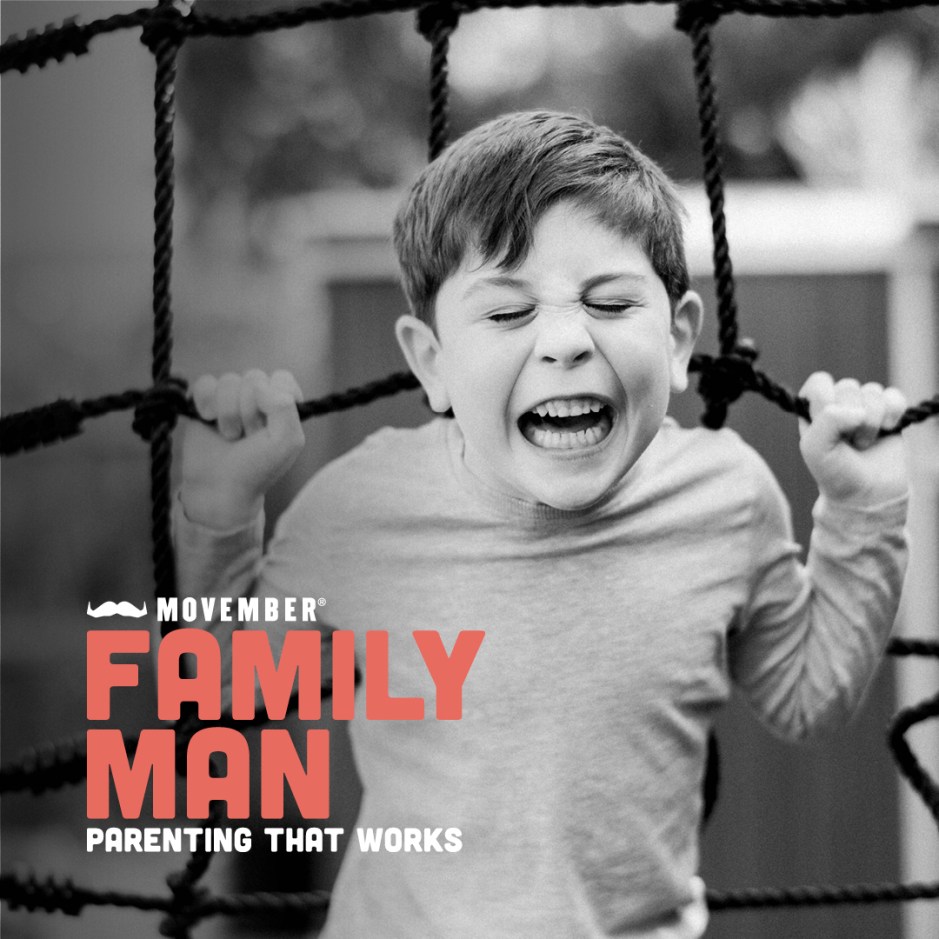
Family Man is a free, online course designed to equip fathers of children between the ages of 2-8 with the practical skills needed to cope with frustrating situations. Drawing on research-based principles of positive parenting, Family Man uses the latest parenting strategies that support happier homes and better mental health.

“There is a huge amount of research that shows parenting is more effective when it’s done as a team,” said Jane Endacott, Director of Digital Health Mental Health and Suicide Prevention at Movember. “We know that when dads are fully engaged in parenting decisions, it benefits the whole family.”

The interactive program is comprised of three 20-minute animated episodes. Each episode features a father as the main character who is faced with a challenging situation such as a battle over the dinner table or a public tantrum – common meltdowns that can cause friction in households and impact the whole family’s mental well being. Users are prompted with a number of possible ways to respond to the situation and an explanation of the pros and cons and likely outcomes of each option coaching fathers through each situation step-by-step.

Adapted from ParentWorks[i], a successful program designed by Professor Mark Dadds at the University of Sydney, Family Man has been vetted by a global panel of psychologists and parenting experts.

“Evidence-based parenting programs are effective in reducing behavioral problems, yet few involve the participation of fathers,” said Professor Dadds. “Family Man was designed to be accessible to all families and may be especially useful in rural and remote areas, where resources can be hard to access. It can be fully delivered online, without the support of trained practitioners, which is a key barrier for many parents.”

A recently launched survey by Movember of 1,600 fathers across North America including 800 US fathers from across the country showed that:

  • Nearly 2 in 3 US dads (63%) said they would be very or extremely likely to seek advice from an online website dedicated to fathers
  • 54% of fathers felt there was a lack of online parenting resources for fathers
  • 47% of fathers felt parenting advice from websites and social media are not aimed at them

Additional survey findings helped inform the need for a tool like Family Man:

  • 94% of dads reported that they feel more engaged with their children during the pandemic
  • 1 in 5 (19%) US fathers say their child’s behavior at home is somewhat manageable while 16% of US fathers say their child’s behavior in public is somewhat manageable
  • 31% of fathers reported feeling more impatient since having children

The  State of the World Father’s report indicates that approximately 80 percent of men will become biological fathers at some point in their lives. In addition, a previous study conducted by Movember also found that 67% of soon-to-be fathers and more than half of all men say that men are under more pressure nowadays to be good fathers.

For more information, visit familyman.movember.com

when the rivers join…

Over the weekend, my husband and I were sitting around a fire pit with some friends. We are having unseasonably warm weather, here in Pennyslvania, and it felt good to try and capture some of the “normal” we’ve lost due to the pandemic.

At one point my husband mentioned growing up near the river, and spending his youth swimming in it, jumping in, etc. I smiled a little bit, because while he and I did not know each other when we were younger, this was something that we had in common. After a twenty-seven year journey with this man, I looked at him and said “the coolest thing about us both doing that separately, is that eventually our two rivers came together.”

And it’s true.

Often, though rivers join, they also branch off again. It happens. It is natural. No matter whether they are patched with rapids, or pitch-black depth, these flowing bodies of water hold life. They are life.

So many of us want marriage to be this beautiful union, and it is. And sometimes it isn’t. Sometimes you’re in sync and other times it feels like you’re so incompatible that it may destroy you.

It’s normal. That’s life.

Sometimes the rivers branch off, but sometimes they come back together.

Today marks a special anniversary with this man and I. This man who is my partner in this winding life of adventure. We haven’t had a perfect relationship because no one does. We’ve had a real, honest and lived one, and honestly, that’s what counts.

I couldn’t imagine sharing the darkest parts of my life, or the brightest, with anyone else.